
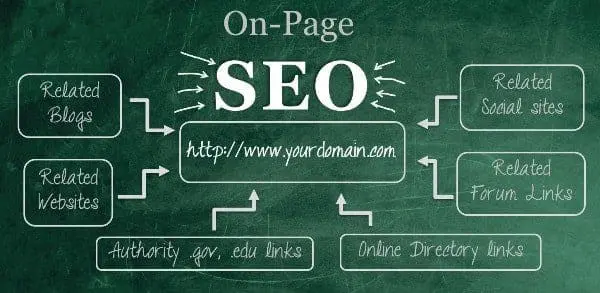
What is SEO? SEO stands for Search Engine Optimization. It is the process of improving your website so search engines can understand it, trust it, and show it to people searching for relevant information, products, or services.
Prime digital marketing agency is a top-rated digital marketing agency in Pakistan that helps startups, business owners, small businesses, and medium enterprises improve online visibility through digital marketing, SEO, content, and performance-focused website strategies.
SEO is not about tricking Google. It is about making the best answer easier to discover, understand, and trust. Google describes SEO as helping search engines understand your content and helping users decide whether they should visit your website.
What Is SEO?
SEO is the process of improving web pages so they can appear better in organic search results.
When people ask what is SEO, they usually want to understand how websites show up on Google without paying for every click.
SEO includes content, website structure, page speed, links, user experience, and technical improvements. The goal is to help search engines understand your page and help users find the right answer.
What Does SEO Stand For?
SEO stands for Search Engine Optimization.
Here is the simple meaning:
- Search means people looking for answers, products, or services.
- Engine means platforms like Google, Bing, or other search engines.
- Optimization means improving web pages so they can be discovered, understood, and ranked.
So, when someone asks what does SEO mean or define SEO, the answer is simple: SEO means making your website easier to find through organic search.
SEO in Simple Words
Think of Google as a library.
Your website is a book.
SEO helps Google understand what your book is about, where it belongs, and when to recommend it to someone searching for that topic.
For example, if your website has a page about “emergency dentist in Chicago,” SEO helps Google understand that the page is useful for people searching for urgent dental care in Chicago.
Why Is SEO Important?
SEO is important because it helps your business appear when people are actively searching for what you offer.
For startups and small businesses in the USA, SEO can become one of the most valuable marketing channels. It brings organic traffic from search queries without charging you for every visit.
SEO matters because it helps with:
- More visibility in Google Search
- More qualified website visitors
- Better trust than some paid placements
- Long-term traffic growth
- Stronger website structure
- Better user experience
A strong SEO strategy helps people find the right page at the right moment. That matters because someone searching “best CRM for small business” is not just browsing. They may be close to making a decision.
Business Benefits of SEO
Good SEO can help your business grow in practical ways:
- More qualified traffic
- More leads or sales
- Lower dependence on ads
- Better brand visibility
- Better site structures
- Improved user experience
- More useful content for customers
SEO also supports other marketing channels. A helpful blog post can become a social media post, sales email, video script, or FAQ answer.
Example of SEO in Action
A dental clinic in Chicago creates a service page for “emergency dentist in Chicago.”
The clinic optimizes the title tag, writes a clear meta description, answers common patient questions, adds location details, earns reviews, builds local citations, and improves page speed.
Over time, that page can appear when local patients search for urgent help. This is a practical example of what is SEO in digital marketing.
How Do Search Engines Work?
Search engines work by crawling pages, indexing eligible content, and ranking results for each search query.
Google says its search system uses automated crawlers to discover pages and add them to its index. Google Search works through three main stages: crawling, indexing, and serving search results.
Crawling
Crawling is when search engine crawlers discover web pages.
Crawlers find pages through links, sitemaps, and existing pages on the web. If your important pages are not linked properly, search engines may struggle to find them.
Indexing
Indexing is when search engines analyze a page and store it in their database.
During indexing, Google looks at text, images, videos, title elements, alt attributes, and other page signals to understand what the page is about. Not every crawled page is guaranteed to be indexed.
Ranking
Ranking is when search engines order results for a user’s query.
Search engines rank pages based on relevance, quality, usefulness, location, device, intent match, and many other signals. Google also makes clear that payment does not improve organic crawling, indexing, or ranking.
Suggested visual:
User search → crawler discovers page → page gets indexed → algorithm ranks page → result appears in SERP.
How Does SEO Work?
SEO works by improving the signals that help search engines and users understand, trust, and use your website.
When someone asks what is SEO and how it works, the answer is this: SEO improves your content, technical setup, internal linking, authority, and user experience so your pages can compete in organic search.
SEO helps search engines understand:
- What the page is about
- Who the page helps
- Whether the content is trustworthy
- Whether the page can be crawled and indexed
- Whether the content satisfies search intent
SEO Starts with Search Intent
Search intent means the reason behind a search.
Common search intent types include:
- Informational intent — the user wants to learn something.
- Navigational intent — the user wants a specific website or brand.
- Commercial intent — the user is comparing options.
- Transactional intent — the user is ready to buy, book, or contact.
For example, “what is SEO” is informational. “best SEO agency for startups” is commercial. “hire SEO consultant” is transactional.
SEO Uses Content, Technical Health, and Authority
Most SEO work falls into three areas:
| SEO Area | What It Means | Example |
| Content relevance | Helping users answer a query | A complete beginner guide |
| Technical accessibility | Helping search engines crawl index pages | Sitemap, speed, mobile usability |
| Authority and trust | Showing credibility | Backlinks, reviews, expert authors |
Google’s helpful content guidance says content should be made for people first, not mainly to manipulate search rankings. It also encourages original, complete, and useful content.
SEO Is Not a One-Time Task
SEO needs regular work.
You need to monitor performance, update old pages, fix technical issues, improve content, build authority, and study new search queries.
A page that ranks today may lose traffic later if competitors publish better content, user intent changes, or technical issues appear.
What Are the Main Types of SEO?
The main types of SEO are on-page SEO, technical SEO, off-page SEO, and local SEO.
Each type supports a different part of seo search engine optimization. A healthy strategy uses all of them together.
| Type of SEO | Main Focus | Examples |
| On-page SEO | Content and page elements | Titles, headings, internal links |
| Technical SEO | Crawlability and performance | Speed, indexing, structured data |
| Off-page SEO | Authority outside your website | Backlinks, mentions, reviews |
| Local SEO | Visibility in local search | Google Business Profile, citations |
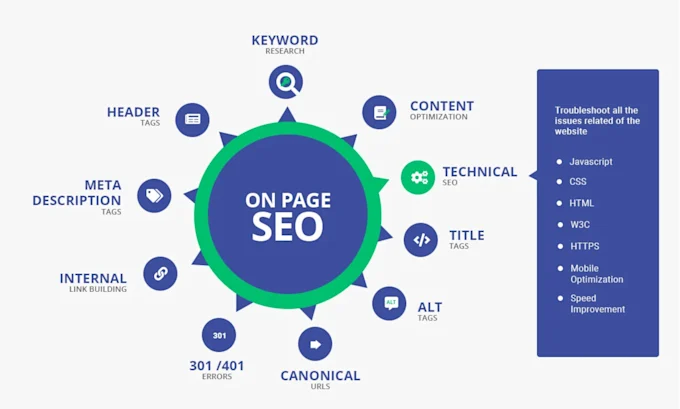
What Is On-Page SEO?
On-page SEO means improving the content and HTML elements on a page.
It includes:
- Title tags
- Meta descriptions
- H1, H2, and H3 headings
- Search intent match
- Internal links
- Image descriptive alt text
- Content quality
- URL structure
A good on-page SEO page is clear for users and easier for search engines to understand.
What Is Technical SEO?
Technical SEO means improving the technical health of your website so search engines can access, crawl, render, and index it.
It includes:
- Crawlability
- Indexing
- Page speed
- Mobile-friendliness
- HTTPS
- Structured data
- XML sitemaps
- Canonical tags
- Clean site structures
Google’s SEO guide highlights common improvement areas such as URLs, titles, descriptions, images, structured data, Search Console, crawling, indexing, and technical discovery.
What Is Off-Page SEO?
Off-page SEO means improving trust and authority outside your own website.
It includes:
- Backlinks
- Digital PR
- Brand mentions
- Reviews
- Citations
- Community visibility
- Social media visibility
Backlinks are not about buying spam links. They are about earning references from relevant and reputable websites.
What Is Local SEO?
Local SEO helps businesses appear for searches in specific locations.
It is important for dentists, restaurants, real estate companies, repair services, clinics, law firms, and local shops.
Local SEO includes:
- Google Business Profile
- Local citations
- Reviews
- Local landing pages
- NAP consistency: name, address, phone number
- Location-based content
Google Business Profile lets businesses appear on Google Search and Maps, add photos, offers, posts, business hours, and respond to reviews.
What Is the Difference Between SEO, SEM, and PPC?
SEO earns organic visibility, PPC buys paid clicks, and SEM is often used for a wider search marketing strategy.
Search Engine Land explains organic search as unpaid traffic from search results and paid search as ads where advertisers pay for clicks.
| Channel | Meaning | Traffic Type | Cost Model | Best For |
| SEO | Search Engine Optimization | Organic | Time, content, expertise, tools | Long-term visibility |
| PPC | Pay-per-click advertising | Paid | Pay for clicks | Fast traffic |
| SEM | Search Engine Marketing | Organic + paid search, depending on usage | Mixed | Wider search strategy |
SEO is usually slower than PPC, but it can build long-term value. PPC can bring faster traffic, but traffic often stops when the budget stops. Search Engine Land also notes that organic traffic can compound over time, while paid search is useful when a business needs quick visibility.
What Does SEO Include?
SEO includes keyword research, content optimization, technical improvements, internal linking, authority building, and reporting.
A complete SEO process is not just writing blogs. It connects strategy, content, technical work, and measurement.
Keyword Research
Keyword research means finding the words and questions people search.
For example:
- what is seo
- what is seo marketing
- what is seo optimization
- what does seo stand for
- what is local seo
- what is technical seo
Good keyword research looks at search volume, difficulty, intent, business value, and content gaps.
Content Optimization
Content optimization means matching the page to the intent behind the keyword.
For the keyword what is SEO, users need a beginner-friendly explanation, examples, types of SEO, how search engines work, and clear next steps.
Technical Improvements
Technical SEO makes your site easier for search engines and users.
This includes fixing crawl errors, improving page speed, using structured data, submitting a sitemap, and making sure important pages are indexable.
Link Building and Authority
Link building means earning links from other websites.
Strong links often come from useful content, research, local partnerships, PR, directories, and expert contributions.
Tracking and Reporting
SEO should be measured.
Useful SEO metrics include:
| Metric | Why It Matters |
| Organic clicks | Shows how many people visit from search |
| Impressions | Shows how often pages appear |
| Click-through rate | Shows how often users click |
| Average position | Shows ranking movement |
| Indexed pages | Shows what Google can include |
| Conversions | Shows business value |
| Search queries | Shows what people actually search |
Google Search Console helps measure search traffic, impressions, clicks, positions, index coverage, and crawl/index information.
What Is SEO Not?
SEO is not instant ranking, keyword stuffing, spam links, or manipulation.
Good SEO is a long-term marketing channel. Bad SEO tries to cheat search engines and usually creates poor user experience.
| SEO Is | SEO Is Not |
| Long-term organic visibility | Instant guaranteed ranking |
| Helpful content + technical improvement | Keyword stuffing |
| Improving user experience | Manipulating search engines |
| Building trust and authority | Buying spam links |
| A measurable marketing channel | A one-time setup |
Google warns against content created mainly to manipulate rankings and encourages helpful, reliable, people-first content.
What Makes a Page Rank in SEO?
Pages rank when they are relevant, useful, accessible, trustworthy, and aligned with search intent.
There is no fixed public checklist of ranking factors. A practical SEO strategy focuses on improving the inputs that matter most to users and search engines.
Relevance
Does the page answer the search query?
A page about “what is SEO” should define SEO, explain how it works, show examples, and answer beginner questions.
Content Quality
Is the content complete, accurate, original, and useful?
High-quality content should not feel thin or copied. It should explain the topic clearly and give the reader enough detail to take action.
Search Intent Match
Does the format match what searchers want?
For “what is SEO,” a beginner guide works well. For “SEO pricing,” users may expect packages, cost ranges, and service comparisons.
Technical Accessibility
Can search engines crawl, render, and index the page?
If important content is blocked, slow, hidden, or broken, the page may struggle even if the writing is good.
Authority and Trust
Does the page show expertise, author credibility, sources, and reputable references?
Google says its systems use many factors to identify content that demonstrates experience, expertise, authoritativeness, and trustworthiness, with trust being especially important.
How Long Does SEO Take?
SEO can take days, weeks, or months depending on the task, competition, and website authority.
A realistic timeline looks like this:
- Small technical fixes: days to weeks
- New content: weeks to months
- Competitive keywords: several months or longer
- New websites: usually longer than established websites
Google states that some changes may be reflected in hours, while others can take several months, and recommends waiting a few weeks to assess impact.
SEO is slower than paid ads, but it can produce long-term organic visibility when done consistently.
Can You Do SEO Yourself?
Yes, beginners can do basic SEO themselves if they follow a clear process.
You do not need to be a developer to start. Many beginner SEO tasks are simple but powerful.
Yes, If You Start with the Basics
Start with these tasks:
- Set up Google Search Console.
- Make sure important pages are indexable.
- Research keywords.
- Improve page titles.
- Write helpful content.
- Add internal links.
- Compress images.
- Add descriptive alt text.
- Monitor organic clicks.
- Update old pages.
When Should You Hire an SEO Specialist?
Hire SEO help when the work becomes more technical, competitive, or risky.
You may need an SEO specialist for:
- Site migrations
- Technical SEO issues
- Large ecommerce websites
- International SEO
- Link strategy
- Sudden traffic drops
- Competitive industries
- Complex site structures
For example, a startup founder can write helpful service pages. But if the website has indexing problems, duplicate pages, JavaScript rendering issues, or a failed migration, expert help can save time and traffic.
What Should a Beginner SEO Checklist Include?
A beginner SEO checklist should cover audience, keywords, intent, content, technical setup, links, and tracking.
Use this simple checklist before publishing a page:
| Task | Done |
| Define the target audience | ☐ |
| Choose one primary keyword per page | ☐ |
| Match search intent | ☐ |
| Write a clear H1 | ☐ |
| Use descriptive H2s and H3s | ☐ |
| Add a concise answer near the top | ☐ |
| Optimize title tag and meta description | ☐ |
| Add internal links | ☐ |
| Add helpful images with alt text | ☐ |
| Improve page speed | ☐ |
| Submit sitemap | ☐ |
| Monitor Search Console | ☐ |
This checklist is useful for blog posts, service pages, product pages, and local landing pages.
What Common SEO Mistakes Should You Avoid?
Common SEO mistakes include writing for algorithms, ignoring intent, publishing thin content, and neglecting technical health.
Avoid these mistakes if you want SEO to work long term.
Writing for Search Engines Instead of People
Do not write robotic content just to repeat keywords.
Use the primary keyword naturally, but focus on answering the reader’s question first.
Targeting Keywords Without Understanding Intent
A keyword is not just a phrase. It represents a need.
If someone searches “what is SEO,” they want education. If they search “SEO agency near me,” they may want to hire.
Ignoring Technical SEO
Good content still needs a healthy website.
If your site is slow, blocked, broken, or hard to crawl, search engines may struggle to use your content.
Publishing Thin or Duplicate Content
Thin content gives shallow answers.
Duplicate content can confuse search engines, especially when several pages target the same search query.
Buying Low-Quality Backlinks
Spam links can damage trust.
Focus on earning links through useful content, partnerships, digital PR, and real authority.
Never Updating Old Content
SEO content can become outdated.
Refresh old pages with better examples, new internal links, updated FAQs, and clearer answers.
How Can You Start Learning SEO?
You can start learning SEO by understanding search, practicing on-page basics, and tracking results in Search Console.
Here is a simple learning path:
Step 1: Learn How Search Works
Understand crawling, indexing, and ranking first.
This makes every SEO task easier to understand.
Step 2: Learn Keyword Research
Study what people search and why they search it.
Focus on keywords that match your audience and business goals.
Step 3: Practice On-Page SEO
Improve titles, headings, content structure, internal links, and image alt text.
Start with one page at a time.
Step 4: Understand Technical SEO Basics
Learn how sitemaps, robots.txt, canonical tags, HTTPS, mobile usability, page speed, and structured data work.
Step 5: Learn Internal Linking and Authority Building
Create topic clusters.
For example, your hub page can target digital marketing, while spoke pages cover what is SEO, what is local SEO, what is on-page SEO, and what is technical SEO.
Step 6: Track Results in Search Console
Watch impressions, clicks, CTR, indexed pages, and search queries.
Use the data to improve pages that are getting visibility but not enough clicks.
Step 7: Build Topic Clusters
A topic cluster helps search engines understand your expertise.
Example:
- Hub: Digital Marketing Guide
- Spoke: What Is SEO?
- Sub-spoke: What Is On-Page SEO?
- Sub-spoke: What Is Technical SEO?
- Sub-spoke: What Is Local SEO?
This structure makes it easier for search engines and users to move through related content.
FAQs About SEO
What is SEO in simple terms?
SEO is the process of improving your website so people can find it through organic search results.
What does SEO stand for?
SEO stands for Search Engine Optimization.
Is SEO free?
SEO traffic is not paid per click, but SEO still requires time, content, tools, technical work, or professional support.
What are the 3 main types of SEO?
The three common types are on-page SEO, off-page SEO, and technical SEO.
What is an example of SEO?
An example of SEO is optimizing a local service page so it appears when people search for that service in their city.
Is SEO better than paid ads?
SEO is better for long-term organic visibility. Paid ads are better for immediate traffic. Many businesses use both.
How long does SEO take?
Some improvements appear in weeks, while competitive SEO growth can take several months.
Can beginners learn SEO?
Yes. Beginners can start with search intent, keyword research, on-page SEO, internal links, and Google Search Console.
Does SEO still matter with AI search?
Yes. AI search still depends on discoverable, trustworthy, well-structured information across the web.
Final Expert Note
SEO is not about chasing every algorithm change. It is about building a website that is clear, useful, technically accessible, and trusted.
For startups, small businesses, and medium enterprises, the best SEO strategy starts with simple foundations: helpful content, clean structure, strong internal linking, technical health, and honest authority building.Contact Prime digital marketing agency today for a free SEO consultation and learn how your business can grow through search.